
Application Security, Compliance & Risk · Professional service
Cybersecurity that finds risk, strengthens software, and supports compliance
Find risk, strengthen software, and prepare for security and compliance requirements.
Penetration testing, security audits, secure SDLC, DevSecOps, compliance readiness, and risk consulting for applications, cloud environments, and growing organizations.
Secure software development Penetration testing and audits Compliance and risk frameworks
Last reviewed:

Application security, compliance, and risk
Cybersecurity services for penetration testing, secure software, compliance, and risk
Waka Consulting helps organizations assess technical and operational risk, test applications under an authorized scope, embed security into software delivery, and prepare for security and compliance requirements. Engagements can cover penetration testing, security audits, secure SDLC, DevSecOps, risk assessment, control mapping, remediation support, and retesting.
Where can we strengthen your security posture?
- Secure software development with threat modelling, architecture and code review, automated checks, audit logging, and DevSecOps controls
- Authorized penetration testing and security audits with verified findings, business-impact ratings, remediation guidance, and retesting
- Compliance and risk consulting with assessments, risk registers, control mapping, workshops, evidence preparation, and readiness roadmaps
Three connected security capabilities
Cybersecurity support from source code to organizational risk
Choose a focused assessment or combine technical testing, secure delivery, and compliance readiness into one prioritized security program. Every engagement is scoped around your systems, data, obligations, and risk tolerance.
Secure software development
Build security into the software development lifecycle instead of waiting for a pre-launch review.
- Threat modelling and security requirements
- Architecture and secure code review
- Automated code, dependency, and secrets checks
- Audit logging and developer remediation guidance
Penetration testing and security audits
Test agreed applications and controls under written authorization, then turn verified findings into an actionable remediation plan.
- Web application and API penetration testing
- Access-control and authentication testing
- Manual validation supported by automated testing
- Evidence-backed reporting, remediation, and retesting
Compliance and risk frameworks
Translate regulatory and framework expectations into practical controls, evidence, ownership, and measurable next steps.
- Cybersecurity risk assessments and risk registers
- Control mapping and gap assessments
- ISO/IEC 27001, GDPR, and HIPAA readiness support
- Policies, evidence preparation, workshops, and roadmaps
Designed forTeams that need defensible findings and a practical path to reducing risk
- Software teams embedding security into delivery
- Businesses preparing for an authorized penetration test
- Organizations working toward audit or compliance readiness
- Leaders who need a prioritized cybersecurity risk plan
Authorized and evidence-led
From scoped assessment to verified remediation
We agree the systems, testing boundaries, stakeholders, evidence needs, and communication path before work begins. Findings are reviewed with the people who own the risk and the people responsible for fixing it.
01
Engagement modelAssess, prioritize, remediate, retest
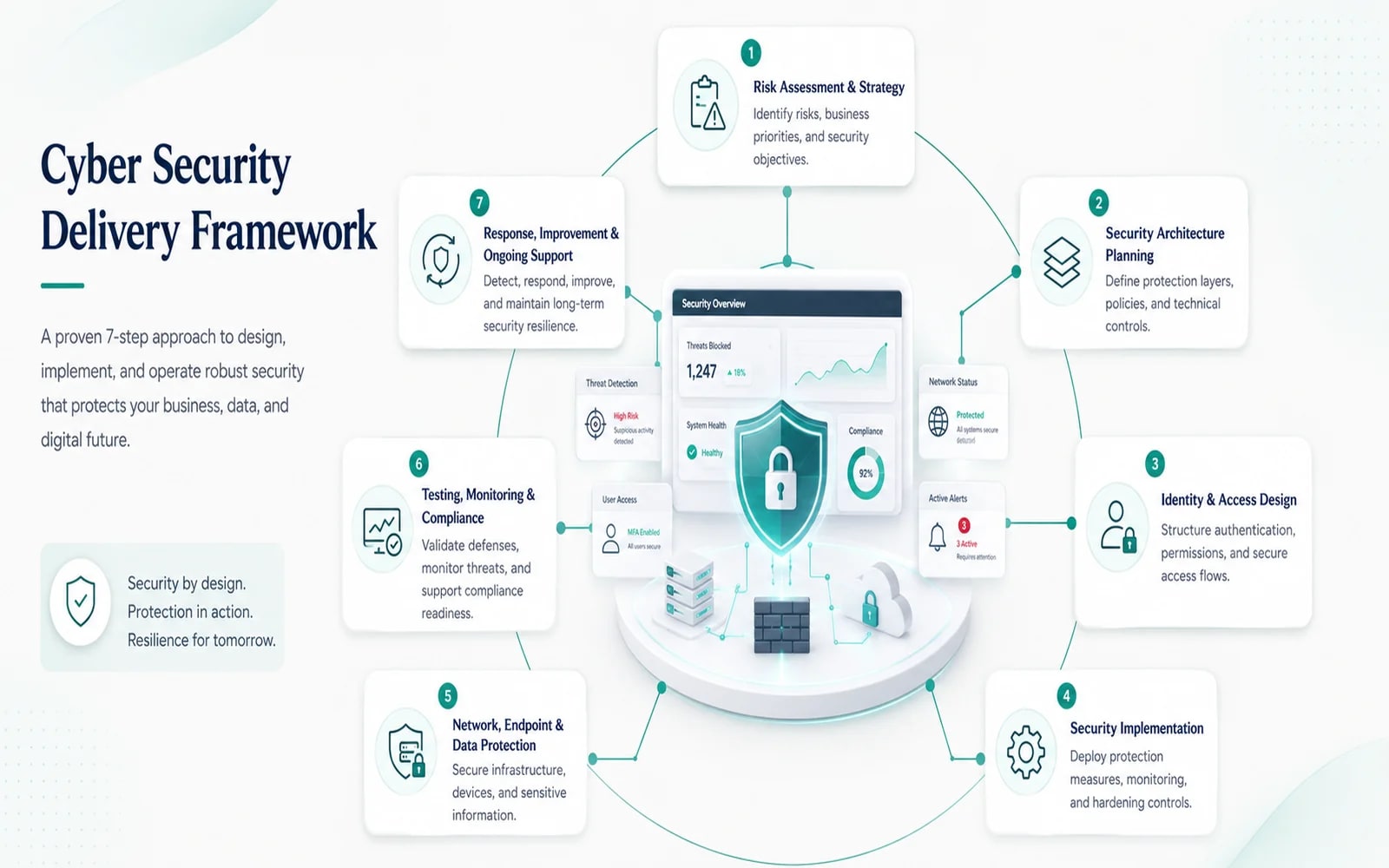
Authorize and scope the engagement
Confirm objectives, in-scope systems, permissions, rules of engagement, stakeholders, meeting cadence, and evidence requirements.
Assess controls and test agreed systems
Review the agreed technical and organizational controls, inspect relevant logs and records, and perform authorized manual and automated testing.
Prioritize findings and advise owners
Validate findings, rate risk using likelihood and business impact, identify control gaps, and review the remediation roadmap with accountable owners.
Support remediation and retest
Help engineering and operational teams address findings, verify agreed fixes, document residual risk, and prepare closure or readiness evidence.
Security that reaches delivery
Technical depth connected to business risk
Testing alone does not reduce risk. We connect findings to engineering work, governance decisions, compliance evidence, and accountable follow-through so your team knows what to fix, why it matters, and how closure will be verified.
Frameworks and delivery practices
Penetration testingSecure SDLCDevSecOpsISO/IEC 27001NIST CSF 2.0OWASP ASVSGDPR readinessHIPAA Security Rule
02
Working principlesClear evidence and accountable follow-through
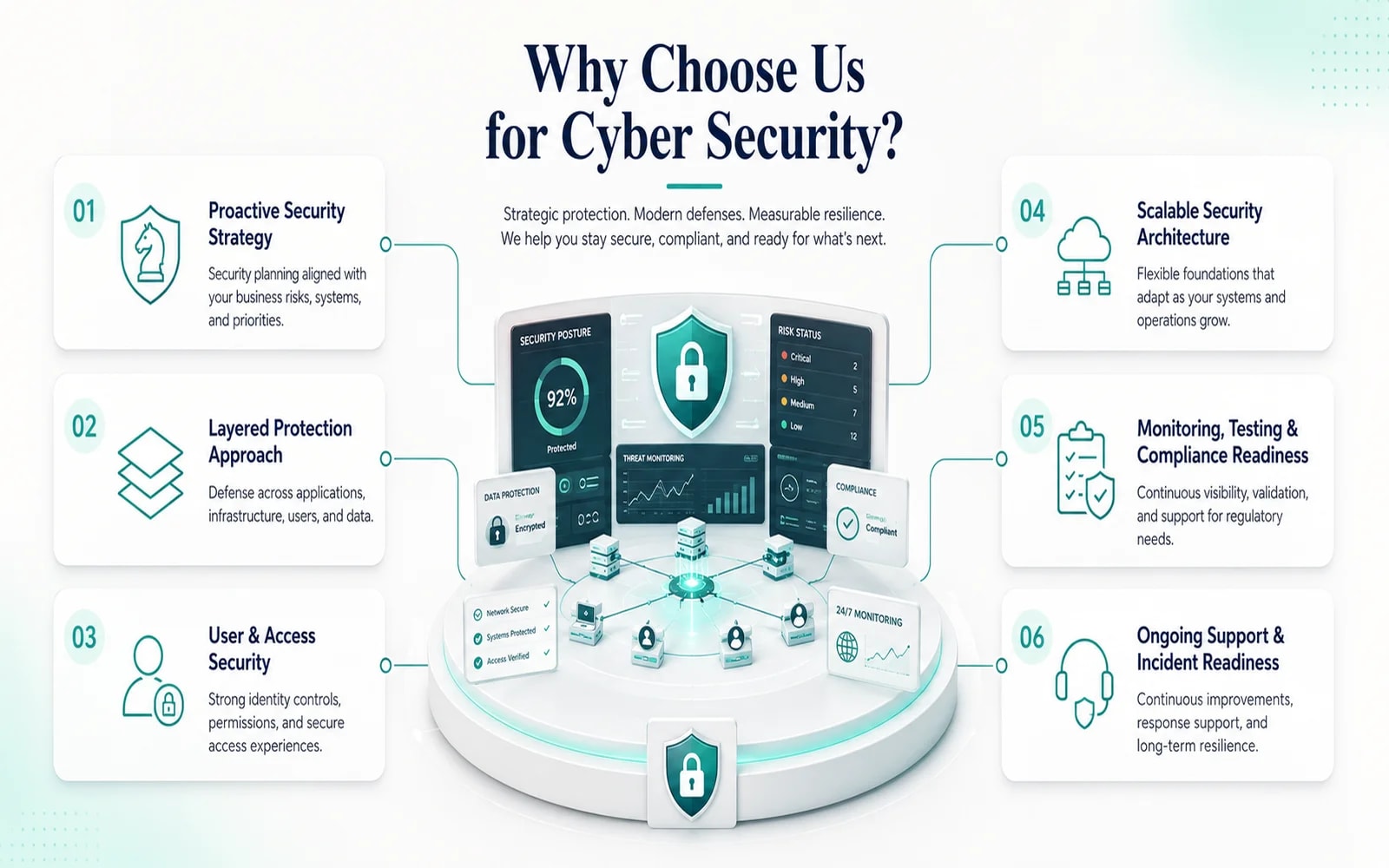
Authorized, controlled testing
Scope, permissions, testing windows, sensitive-data handling, and escalation paths are agreed before assessment activity starts.
Findings people can act on
Reports connect technical evidence to business impact, severity, ownership, and specific remediation guidance instead of exporting unverified scanner output.
Support through closure
Consultancy continues through stakeholder reviews, engineering questions, risk decisions, evidence preparation, and retesting of agreed fixes.
Questions, answered
Cybersecurity FAQ
Direct answers about penetration testing, secure development, compliance readiness, deliverables, and retesting.
Ask about your projectWhat can a cybersecurity engagement include?
The scope can include secure SDLC and DevSecOps assessment, threat modelling, architecture and code review, authorized penetration testing, audit-log review, cybersecurity risk assessment, control mapping, compliance gap assessment, remediation support, and retesting. We confirm the exact systems, objectives, and deliverables before work begins.
What is the difference between a penetration test and a security audit?
A penetration test actively evaluates an authorized target to identify and validate exploitable weaknesses. A security audit examines whether defined controls, configurations, processes, and evidence meet an agreed baseline or framework. An engagement may include one or both depending on the decision you need to make.
How do you keep penetration testing controlled?
Testing begins only after written authorization and agreed rules of engagement. The scope defines targets, exclusions, testing windows, communication contacts, data-handling expectations, stop conditions, and how urgent findings will be escalated.
How can you improve security inside our SDLC and DevSecOps workflow?
We can review security requirements, threat modelling, code-review practices, dependencies, secrets handling, build pipelines, environments, audit logging, and vulnerability response. Recommended automated checks are selected for the codebase and integrated with clear ownership and exception handling.
Do automated code checks prevent every exposure?
No. Automated checks can identify vulnerable dependencies, exposed secrets, insecure patterns, and configuration risks earlier, but they do not replace threat modelling, manual review, penetration testing, or risk-based decisions. Results should be validated and maintained as the software changes.
Can Waka certify us as compliant with ISO/IEC 27001, GDPR, or HIPAA?
Waka provides readiness, gap-assessment, control-mapping, evidence-preparation, and remediation support. ISO/IEC 27001 certification must be performed by an appropriate independent certification body, while GDPR and HIPAA obligations depend on your organization, processing activities, contracts, and jurisdiction. Our work supports—not guarantees—compliance and does not replace legal advice.
What do we receive after an assessment?
Typical outputs include an executive summary, scope and methodology, evidence-backed findings, severity and business-impact ratings, a prioritized remediation roadmap, stakeholder review meetings, and retest notes for agreed fixes. Risk and compliance engagements can also include a risk register, control-gap matrix, evidence checklist, and ownership plan.
Featured Insights
Stories of Digital Transformation Across Services and Industries
From Idea to Impact






Start with the right scope
Turn security concerns into an authorized, evidence-led assessment.
Tell us what you need to protect, test, or prepare for. We will help define the systems, stakeholders, evidence, and next step without overstating what one assessment can guarantee.