
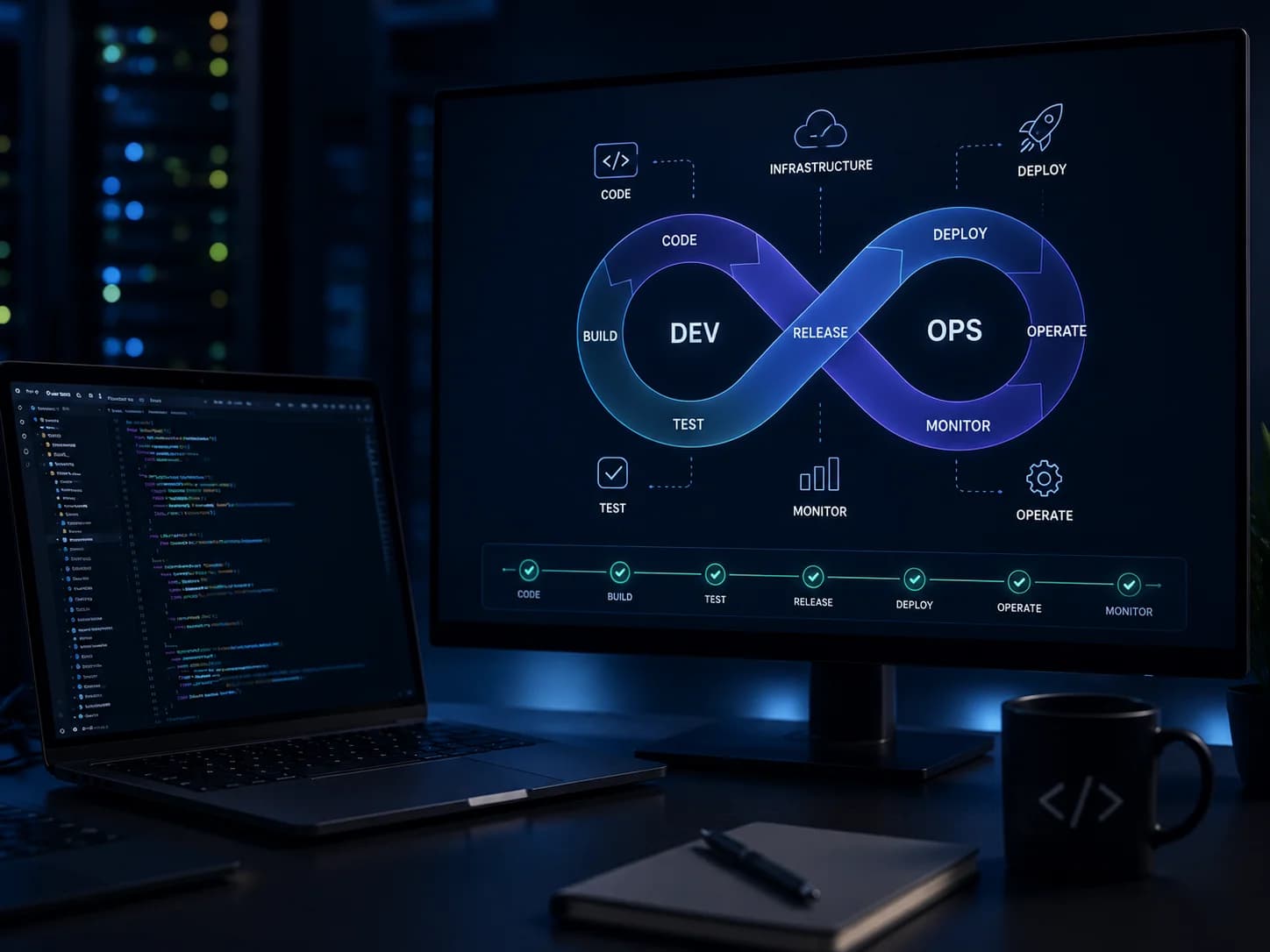
DevOps for Small Teams: A Practical Reliability Guide
Small teams do not need a large platform department to practise DevOps. They need a release process that is repeatable, observable, secure enough for the product, and recoverable when a change fails.
What is the recommended approach?
Begin with version control, automated checks, separate environments, consistent deployments, centralised logs, uptime alerts, tested backups, and a documented rollback path. Add complexity only when a measured reliability, security, or delivery constraint requires it.
What DevOps practices does a small team need first?
Prioritise source control, automated quality checks, environment separation, repeatable deployment, monitoring, backups, access control, and recovery.
These practices reduce avoidable variation and make failures easier to diagnose. Infrastructure-as-code, containers, orchestration, or advanced platform tooling may help later, but they are not substitutes for a clear operating process.
How should a simple CI/CD pipeline work?
Each proposed change should run automated checks, produce a consistent build, and follow an approved path into staging and production.
Keep secrets outside the codebase, make failures visible, and record what version was deployed. Add automated production deployment only when the team trusts its tests, reviews, permissions, and rollback procedure.
- Linting, tests, and security checks appropriate to the project
- Reproducible build and deployment artefacts
- Deployment history with named ownership
What should a small team monitor?
Monitor conditions that affect users or the team's ability to recover: availability, errors, latency, critical jobs, resource limits, backups, and certificate or dependency failures.
Alerts need thresholds, owners, and an action. Avoid notifying the team about every technical fluctuation; noisy alerts train people to ignore the signal that matters.
How should rollback and disaster recovery be planned?
Define how to reverse a release, restore data, recover infrastructure, communicate an incident, and decide when normal service has returned.
Test database restores and critical recovery steps on a schedule. Record recovery time and data-loss tolerances so architecture and backup decisions reflect actual business needs.
Questions teams ask before they begin
Does a small team need Kubernetes?
Usually not by default. Kubernetes can solve specific orchestration and platform needs, but it also adds operational complexity. Start with the simplest deployment model that meets reliability, security, scaling, and ownership requirements.
What is the difference between CI and CD?
Continuous integration automatically validates changes as they are combined. Continuous delivery keeps software in a releasable state; continuous deployment goes further by releasing approved changes automatically.
How often should backups be tested?
Testing frequency should reflect business recovery requirements and the rate of data change. Restore tests must be regular enough to detect broken jobs, missing permissions, incomplete data, and recovery steps that no longer match the system.
What supports this guide
- Secure Software Development FrameworkUS National Institute of Standards and Technology
Turn the guide into a practical project plan
Waka can help clarify the workflow, define the right first release, and create a delivery plan around your users, risks, and business goals.