
Product Discovery, UX Research & Interface Design · Professional service
Design digital products around evidence—not interface assumptions
Research-led digital experiences shaped around user decisions, business goals, and build reality.
We investigate user needs, structure complex journeys, prototype interactions, design responsive interfaces, and prepare clear systems and specifications for product teams and developers.
User research and product definition Flows, prototypes, and validation Interface systems and developer handoff
Last reviewed:

Product discovery, UX research, and interface design
UI/UX design from user evidence to validated, build-ready interfaces
Waka Consulting helps teams reduce product and interface uncertainty through research, information architecture, user journeys, wireframes, interactive prototypes, usability validation, responsive UI, accessibility review, design systems, and developer handoff. The work can end with validated designs or continue into an implementation engagement.
What makes a product experience ready to build?
- Research and product definition with stakeholder and user interviews, experience audits, evidence review, needs, constraints, assumptions, and prioritized design questions
- Information architecture, flows, wireframes, and prototypes that expose content, navigation, permissions, states, edge cases, and interaction decisions before development
- Responsive interface systems and implementation handoff with components, design tokens, accessibility guidance, behavior specifications, assets, and developer review
Evidence before polish
Product definition, interaction design, validation, and implementation clarity
UI/UX work should reduce uncertainty before and during development. We connect user and stakeholder evidence to information architecture, flows, prototypes, interface decisions, accessibility, reusable components, and a handoff developers can inspect and discuss.
Research and product definition
Understand the product problem, audiences, constraints, and decisions before proposing an interface direction.
- Stakeholder and user interviews
- Current-experience or competitor review
- Jobs, needs, constraints, and assumption mapping
- Research findings and prioritized design questions
Information architecture and user flows
Turn requirements into a coherent structure that shows how people find information and complete priority tasks.
- Sitemaps or product information architecture
- User journeys and task flows
- Navigation, state, and content hierarchy
- Edge cases, permissions, and decision points
Wireframes, prototypes, and validation
Explore and test interaction choices before visual detail or engineering effort makes change expensive.
- Low- and high-fidelity wireframes
- Interactive prototypes for critical journeys
- Usability sessions or structured stakeholder validation
- Findings, revisions, and unresolved-risk log
Interface systems and developer handoff
Create a responsive interface language and document the behavior required for faithful implementation.
- High-fidelity responsive screens
- Reusable components, states, and design tokens
- Accessibility and content-behavior guidance
- Specifications, assets, and developer review
Designed forTeams that need clarity about users, journeys, and interaction behavior before or during a build
- Founders shaping a new digital product
- Teams improving a confusing application
- Businesses preparing a website or mobile build
- Product teams standardizing an inconsistent interface
A decision-led design process
From research questions to validated, build-ready interfaces
We agree what must be learned, which journeys carry the most risk, who should review them, and what development needs from the handoff. The process stays proportionate: not every project needs extensive research, but every important design decision needs a reason.
01
Design workflowUnderstand, structure, prototype, validate, specify
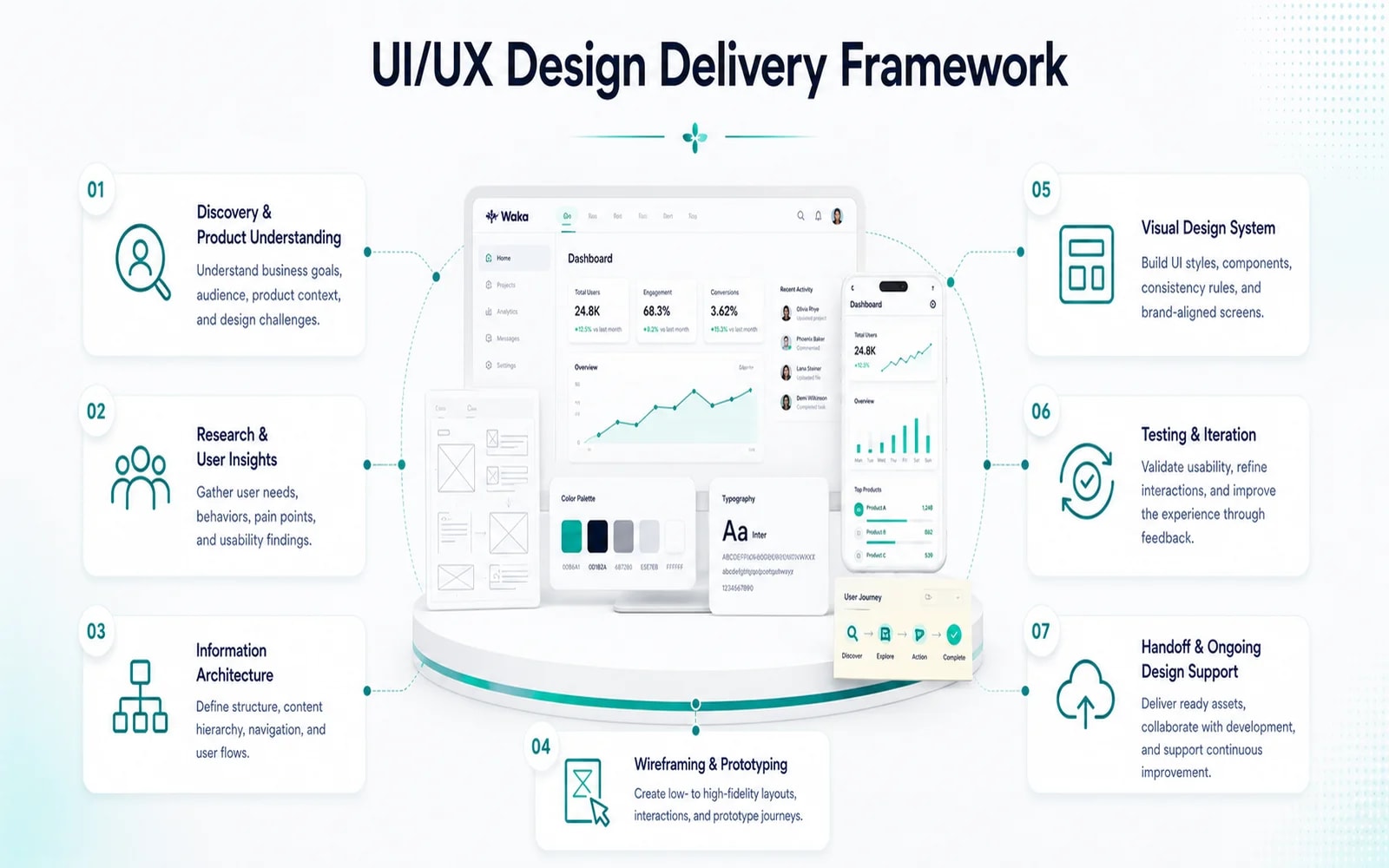
Understand users and product decisions
Clarify the product goal, users, evidence already available, constraints, technical context, success measures, and the decisions the design work must resolve.
Structure and test priority journeys
Map information and priority tasks, expose edge cases and content needs, and test the structure before investing in a polished visual system.
Design the responsive interface system
Develop responsive interaction and interface directions, prototype critical journeys, and validate the assumptions with suitable users or accountable stakeholders.
Validate and support implementation handoff
Document components, states, behavior, accessibility, and assets; review implementation questions with developers and record any decisions that remain open.
Design that survives implementation
User evidence, business context, and technical reality in one workflow
Good interface work is not a gallery of attractive screens. We make the reasoning, flows, content, states, components, and constraints visible so stakeholders can review the right questions and developers can build the intended experience without guessing.
Research and design practices
FigmaUser interviewsJourney mappingWireframingInteractive prototypesUsability testingAccessibility reviewDesign systems
02
Working principlesClarity before decoration
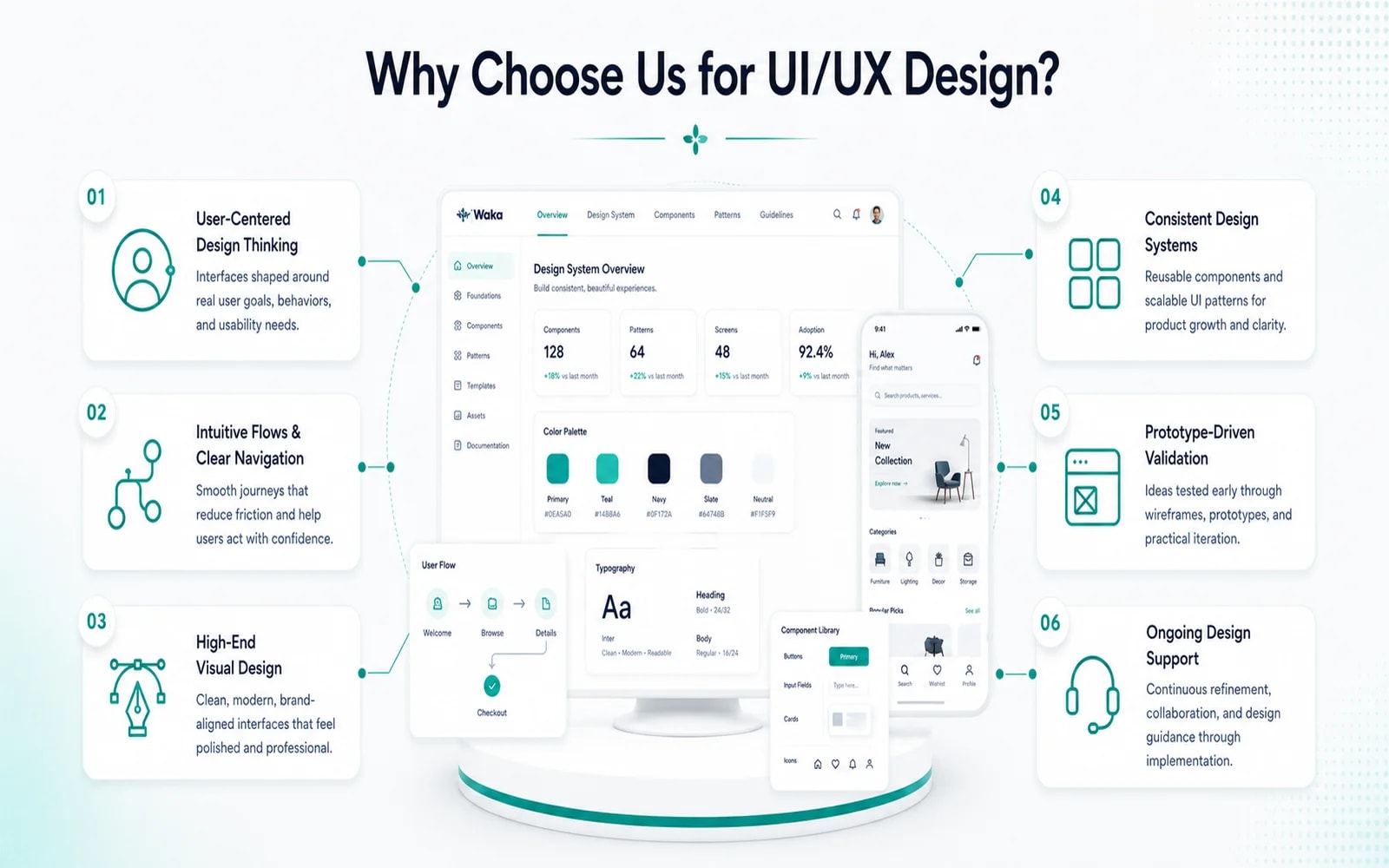
Evidence proportional to risk
Research depth follows the uncertainty and consequence of the decision. Existing data, interviews, prototypes, and usability feedback are used where each can materially change the direction.
Complete journeys, not isolated screens
Design covers entry points, navigation, content, permissions, loading, empty, validation, success, error, and recovery states across the priority workflow.
Handoff is part of design
Components, responsive behavior, states, assets, accessibility notes, and implementation questions are reviewed with developers instead of being left inside an unexplained design file.
Questions, answered
UI/UX Design FAQ
Direct answers about research, wireframes, prototypes, usability testing, accessibility, design systems, development handoff, and scope.
Ask about your projectWhat can a UI/UX design engagement include?
The scope can include stakeholder and user research, experience audits, information architecture, user journeys, task flows, content hierarchy, wireframes, interactive prototypes, usability testing, responsive interface design, accessibility review, component and design-system work, specifications, assets, and developer handoff. We select the activities that resolve the project’s actual uncertainty rather than forcing every client through one fixed process.
How is UI/UX Design different from Web Development?
UI/UX Design can end with validated flows, prototypes, interface systems, and an implementation handoff. Web Development owns the working public website, its front-end implementation, content system, integrations, performance, technical SEO, analytics, testing, and launch. The services can be combined when one team should own both decisions and implementation.
Do you always conduct user research?
The research method depends on the decision and available evidence. A new or high-risk product may benefit from interviews and usability sessions, while a focused improvement may rely on existing analytics, support themes, stakeholder knowledge, and targeted prototype testing. We state what evidence was used and what remains an assumption.
What is the difference between a wireframe and a prototype?
A wireframe communicates structure, hierarchy, and content without committing to final visual treatment. A prototype links screens and interactions so a journey can be reviewed or tested. Neither is automatically production software, although both can reduce ambiguity before development.
Can you improve an existing product instead of redesigning everything?
Yes. We can audit priority journeys, identify usability and consistency issues, review product evidence, and improve selected flows or components. The scope should protect working behavior and focus redesign effort where it can resolve a demonstrated problem.
How do you address accessibility?
Accessibility is considered through structure, hierarchy, contrast, typography, focus behavior, touch targets, form guidance, component states, responsive behavior, and content clarity. Design review supports accessible implementation, but final conformance also depends on the built product, content, testing, and ongoing maintenance.
Will the design guarantee higher conversion or user satisfaction?
No design can guarantee a business outcome. We connect decisions to available evidence, define success measures, test important assumptions where practical, and prepare analytics or research questions for after launch. Results must be measured in the real product and market.
What do developers receive at handover?
Typical outputs include approved flows and screens, responsive layouts, component states, design tokens or reusable styles, interaction notes, assets, content guidance, accessibility considerations, prototype links, known edge cases, unresolved questions, and review support during implementation.
Featured Insights
Stories of Digital Transformation Across Services and Industries
From Idea to Impact





Start with the uncertain decision
Turn a confusing journey into a focused design brief.
Tell us who the users are, what they need to complete, what is not working today, and what the build team needs next. We will recommend the right research, flow, prototype, or interface scope.