
Shopify Strategy, Theme Engineering & Launch · Professional service
Create a Shopify storefront your customers can use and your team can operate
Build a branded, manageable Shopify storefront within the platform's real capabilities and constraints.
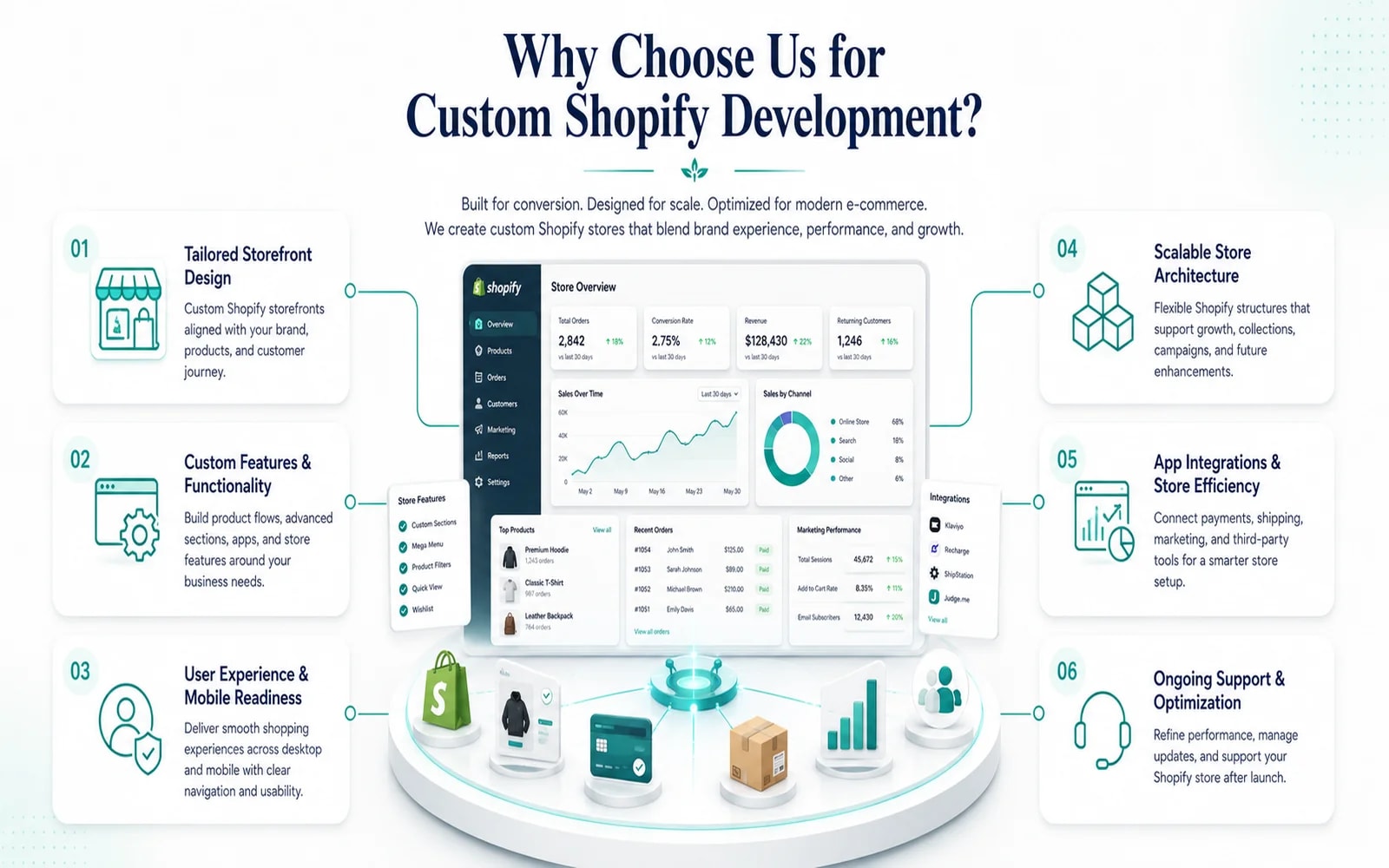
We audit, design, customize, and launch Shopify storefronts with deliberate theme architecture, reusable sections, product content, app and service integrations, transaction testing, analytics, publishing guidance, and store ownership planned together.
Theme architecture and reusable sections Shopify catalog, content, and integrations Transaction, publishing, and launch readiness
Last reviewed:

Custom Shopify development
Custom Shopify development for maintainable themes, merchandising, and store operations
We audit, design, customize, and launch Shopify storefronts within the platform's real theme, content, app, account, checkout, and administration model. The work connects customer journeys with reusable merchant controls, catalog structure, integrations, transaction QA, analytics, publishing, and ownership.
What makes a custom Shopify store ready to publish and operate?
- Audit the store, theme, apps, catalog, content, analytics, merchant workflow, and Shopify plan constraints before customizing
- Develop responsive Liquid themes, reusable sections, blocks, templates, settings, metafields, metaobjects, and catalog journeys
- Configure approved apps and services, test representative products and transactions, verify publishing and analytics, and document merchant ownership
Built for Shopify
Theme engineering, merchandising control, integrations, and launch quality
This service starts with Shopify as the chosen commerce platform. We work within its theme, content, app, account, checkout, and administration model; customize where the customer or merchant experience needs it; and keep platform and plan constraints explicit before they become late-stage surprises.
Store strategy, theme architecture, and UX
Understand the brand, catalog, customer journeys, merchant workflow, current theme and app estate, and the Shopify constraints shaping the build.
- Store, theme, app, catalog, content, and analytics audit
- Audience, merchandising, and priority-journey definition
- Theme approach, content model, and customization boundary
- Requirements, dependencies, risks, and launch measures
Custom theme, section, and template development
Create a responsive storefront system with reusable merchant-controlled components rather than a collection of brittle one-off pages.
- Theme setup, customization, or custom theme development
- Reusable sections, blocks, templates, and settings
- Collection, product, cart, content, and account experiences
- Liquid, responsive behavior, accessibility, and performance review
Catalog, content, apps, and integrations
Structure product and editorial content, configure necessary apps and services, and make store ownership understandable to the operating team.
- Products, variants, collections, menus, metafields, and metaobjects
- Approved app evaluation, configuration, and integration
- Payments, shipping, tax, email, analytics, or service connections
- Content-entry rules, app ownership, and operational exception paths
Transaction readiness, analytics, QA, and handover
Verify customer, transaction, merchant, and publishing scenarios before release, then hand over the store with its limits and responsibilities documented.
- Product, promotion, cart, checkout, payment, and notification QA
- Theme editor, publishing, permissions, and content checks
- Analytics events, consent, performance, and device review
- Launch checklist, documentation, training, and support ownership
Designed forMerchants committed to Shopify who need platform-specific theme and store work - platform selection or highly custom commerce belongs in the broader E-commerce service
- Brands launching a considered Shopify storefront
- Stores outgrowing a rigid off-the-shelf theme
- Teams improving product discovery and merchandising
- Merchants reducing app clutter or formalizing store ownership
A Shopify-native process
From store audit to a tested theme, transaction path, and merchant handover
We review customer journeys and merchant operations together, agree what belongs in native Shopify configuration, theme code, content modeling, or an app, and validate the result in the store environment. This keeps customization useful, maintainable, and honest about platform constraints.
01
Shopify workflowAudit, design, theme, configure, test, publish
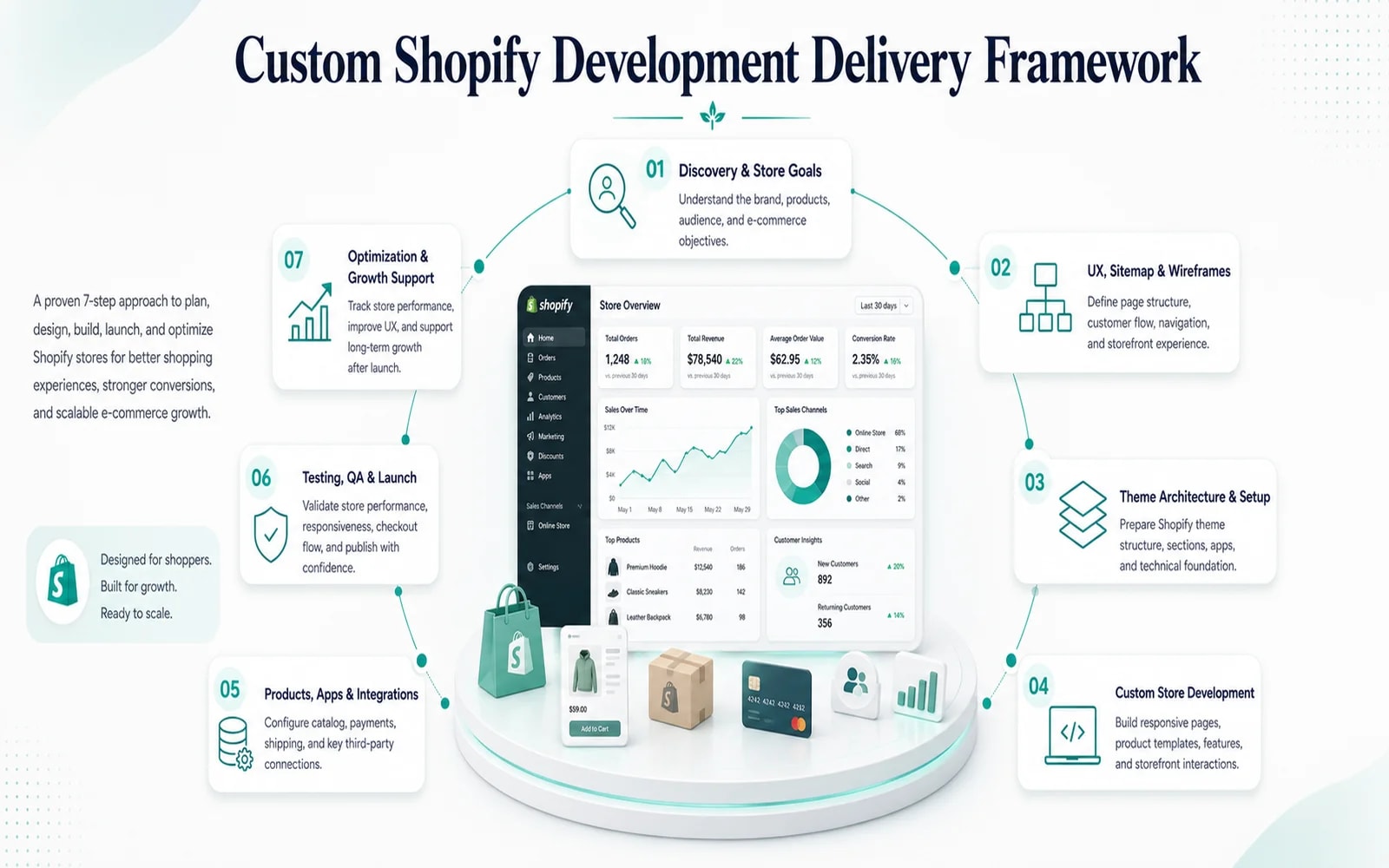
Audit the store, catalog, and goals
Review the business goals, target customers, product and collection structure, theme, app subscriptions, content, integrations, analytics, operations, permissions, and known friction in the current or planned store.
Design priority journeys and the theme system
Define priority discovery and purchase journeys, visual and interaction direction, reusable sections and templates, content fields, theme settings, and the approved boundary between native features, code, and apps.
Build, configure, and integrate Shopify
Develop and configure the theme, templates, sections, catalog content, metafields or metaobjects, navigation, approved apps, and external services; review completed journeys in the Shopify environment.
Test transactions, publishing, and launch controls
Exercise products, variants, promotions, cart, checkout, payments, notifications, content editing, publishing, devices, performance, analytics, permissions, and recovery paths; then document and hand over store ownership.
Platform-aware customization
Use Shopify's strengths without hiding its constraints
A custom store should not depend on undocumented theme hacks, unnecessary apps, or assumptions about checkout control. We make the native-versus-custom decision explicit, design reusable merchant controls, document third-party dependencies, and test both the buying experience and the work of running the store.
Shopify delivery capabilities
ShopifyLiquidTheme architectureSections and templatesMetafields and metaobjectsShopify appsPayments and shippingAnalytics and performance testing
02
Working principlesCustom where it earns its keep
Native first, custom deliberately
Shopify configuration and theme capabilities are used where they fit. Custom Liquid, sections, content models, and apps are introduced for a demonstrated customer or merchant requirement, with the maintenance cost visible.
Merchant control is a requirement
Reusable sections, templates, fields, settings, previews, roles, and publishing guidance are planned so routine merchandising does not require editing code or guessing how a page was assembled.
The transaction is tested end to end
Representative products, variants, discounts, cart states, checkout, payment outcomes, notifications, analytics, and merchant follow-up are checked within the capabilities of the store and selected Shopify plan.
Questions, answered
Custom Shopify Development FAQ
Direct answers about Shopify themes, Liquid, sections, checkout limits, apps, catalog migration, performance, measurement, launch, and ownership.
Ask about your projectWhat can a Custom Shopify Development engagement include?
The scope can include a store and theme audit, customer journeys, visual direction, theme setup or custom development, Liquid, reusable sections and templates, products and collections, metafields and metaobjects, navigation, app and service integrations, payment and shipping configuration support, analytics events, responsive and accessibility review, performance work, transaction QA, launch, documentation, and merchant handover. Exact capabilities depend on the selected Shopify plan and approved apps.
How is this different from the broader E-commerce Development service?
Custom Shopify Development assumes Shopify is already the selected platform and works within its theme, content, app, account, checkout, and administration model. E-commerce Development is platform-neutral and begins with the commerce architecture, catalog rules, checkout needs, integrations, and operating model before deciding which platform or custom boundary fits.
Do you build themes from scratch or customize existing themes?
Both are possible. The right approach depends on brand differentiation, journey and component needs, the quality and license of the existing theme, app interactions, performance, budget, timing, and who will maintain it. We document the theme base and customization boundary so ownership is clear.
Can every part of Shopify checkout be customized?
No. Checkout and account customization varies by Shopify's current platform capabilities, extensions, apps, payment setup, and plan. We verify the relevant capability before promising a design, recommend supported approaches, and make any platform limitation or plan dependency explicit in scope.
Can you install or build Shopify app integrations?
We can evaluate, configure, and integrate approved apps, and can assess custom integration work where Shopify and the external service expose suitable APIs or extensions. We review permissions, data flow, storefront impact, subscription cost, failure behavior, testing, vendor dependency, and owner responsibility rather than treating app installation as complete integration.
Can you migrate products and content into Shopify?
Yes, when migration is included and the source data is available in a usable form. We map products, variants, collections, images, fields, handles, redirects, customers, orders, and editorial content according to the agreed scope, then validate representative records and document anything that cannot transfer cleanly. Sensitive customer and order data requires careful authorization and handling.
Will the Shopify work guarantee better SEO, speed, conversion, or revenue?
No. We can improve the technical and experience factors within scope, such as theme structure, responsive behavior, accessibility, image delivery, app load, content hierarchy, metadata foundations, analytics, and transaction clarity. Search, performance, conversion, and revenue also depend on the platform, apps, content, traffic, offer, catalog, pricing, operations, and continued testing.
Who owns and operates the store after launch?
The merchant should retain ownership of the Shopify organization or store, domain, billing, payment accounts, app subscriptions, analytics, customer data, and key access. Handover can include theme source and version notes, content and catalog guidance, app inventory, configuration and integration notes, launch checks, known limits, staff training, and a support path.
Featured Insights
Stories of Digital Transformation Across Services and Industries
From Idea to Impact






Start with the store reality
Turn your Shopify goals into a clear theme, content, and launch scope.
Tell us whether the store is new or live, which theme and apps are involved, how the catalog works, and where customers or merchants are getting stuck. We will recommend the right Shopify-specific next step.