
Business Systems, Workflow Platforms & Integrations · Professional service
Build software around the operation your business actually needs
Operational software shaped around your roles, records, rules, integrations, and exceptions.
We discover, design, engineer, integrate, and operate custom business systems for workflows that spreadsheets, disconnected tools, and packaged products cannot support reliably.
Requirements and workflow engineering Roles, records, and business rules Integrations, deployment, and ownership
Last reviewed:

Business systems, workflow platforms, and integrations
Custom software development for roles, records, rules, and operational workflows
Waka Consulting discovers, designs, engineers, integrates, and operates custom business systems for workflows that spreadsheets, disconnected tools, and packaged products cannot support reliably. Engagements can cover requirements engineering, role-based applications, data and business rules, APIs, integrations, automation, reporting, testing, migration, cloud deployment, observability, documentation, and ongoing releases.
When does custom software become the right investment?
- Process discovery and requirements engineering with stakeholder workshops, current-state workflows, exceptions, priorities, acceptance criteria, MVP boundaries, and delivery roadmaps
- Roles, records, data states, permissions, business rules, approvals, notifications, audit history, application architecture, and operational controls
- Custom modules, APIs, integrations, automation, QA, migration, deployment, documentation, training, ownership handover, and maintainable improvement cycles
From operating problem to owned platform
Custom software across workflows, data, rules, integrations, and operations
Custom development should solve a business constraint that packaged tools cannot address cleanly. We model the roles, records, approvals, exceptions, business rules, integrations, reporting, security needs, deployment context, and ownership required for a dependable operational system.
Process discovery and requirements engineering
Understand the real operating process, pain, constraints, and exceptions before translating requests into a feature list.
- Stakeholder workshops and workflow observation
- Current tools, handoffs, delays, and failure points
- Requirements, priorities, assumptions, and acceptance criteria
- MVP boundary, dependencies, and delivery roadmap
Roles, data, and system architecture
Define how people, records, permissions, rules, and technical boundaries work together before implementation expands.
- User roles, responsibilities, and access model
- Data entities, states, history, and ownership
- Business rules, approvals, exceptions, and notifications
- Application, API, storage, and deployment architecture
Custom modules, APIs, and integrations
Build the priority operational journeys and connect the systems required to complete work without fragile manual duplication.
- Role-based application modules and administration
- APIs, webhooks, imports, exports, and third-party integrations
- Workflow automation, validations, and exception handling
- Reporting, audit history, and operational controls
Quality assurance, deployment, and ownership handover
Validate the system against real workflows and prepare the platform, data, environments, and owners for dependable operation.
- Functional, integration, permission, and workflow testing
- Data migration or reconciliation when included
- Deployment, backups, diagnostics, and monitoring guidance
- Documentation, training, ownership, and improvement backlog
Designed forOrganizations with valuable workflows that packaged tools cannot support without damaging compromises
- SMEs outgrowing spreadsheets or disconnected tools
- Teams with business rules packaged software cannot support
- Organizations replacing fragile manual handoffs
- Businesses building a long-term operational platform
Operational software delivery
From process evidence to a tested, owned business system
We agree the operational problem, users, records, rules, integrations, constraints, success measures, and ownership before scaling the build. Delivery proceeds through complete, demonstrable workflows so business and technical stakeholders can review the same system behavior.
01
System workflowDiscover, model, build, integrate, validate, operate
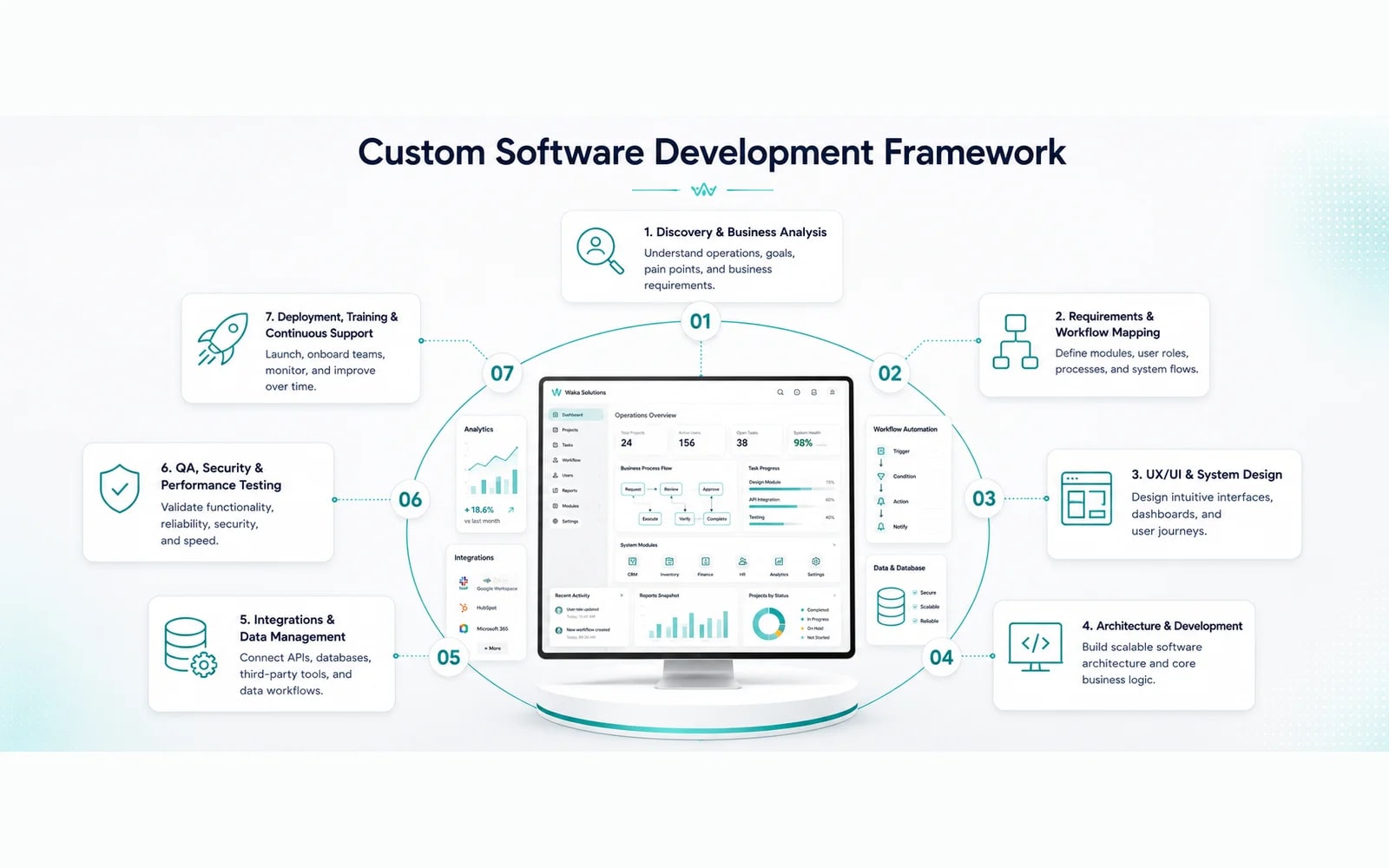
Map the operating problem and constraints
Map the current operation, users, records, decisions, exceptions, pain, dependencies, risks, and measurable constraints before recommending custom development.
Define roles, records, rules, and architecture
Define the target workflow, roles, permissions, data states, business rules, integrations, architecture, acceptance criteria, and smallest useful release.
Build and integrate in reviewable releases
Build complete operational journeys in reviewable increments, connect approved systems, test rules and exceptions, and keep scope decisions visible to owners.
Validate operations, deploy, and hand over
Validate work with representative users and data, prepare migration and deployment where required, document operations, train owners, and prioritize the next release.
Business logic stays visible
Product, engineering, integration, and operations in one delivery model
Custom systems fail when features are built without understanding the operation they must support. We keep roles, data, rules, exceptions, integrations, quality, deployment, and ownership connected so the software becomes a maintainable business capability rather than another isolated tool.
Software delivery capabilities
Next.jsNode.jsSQL databasesAPIsRole-based accessWorkflow automationCloud deploymentObservability
02
Working principlesWorkflow value before feature volume
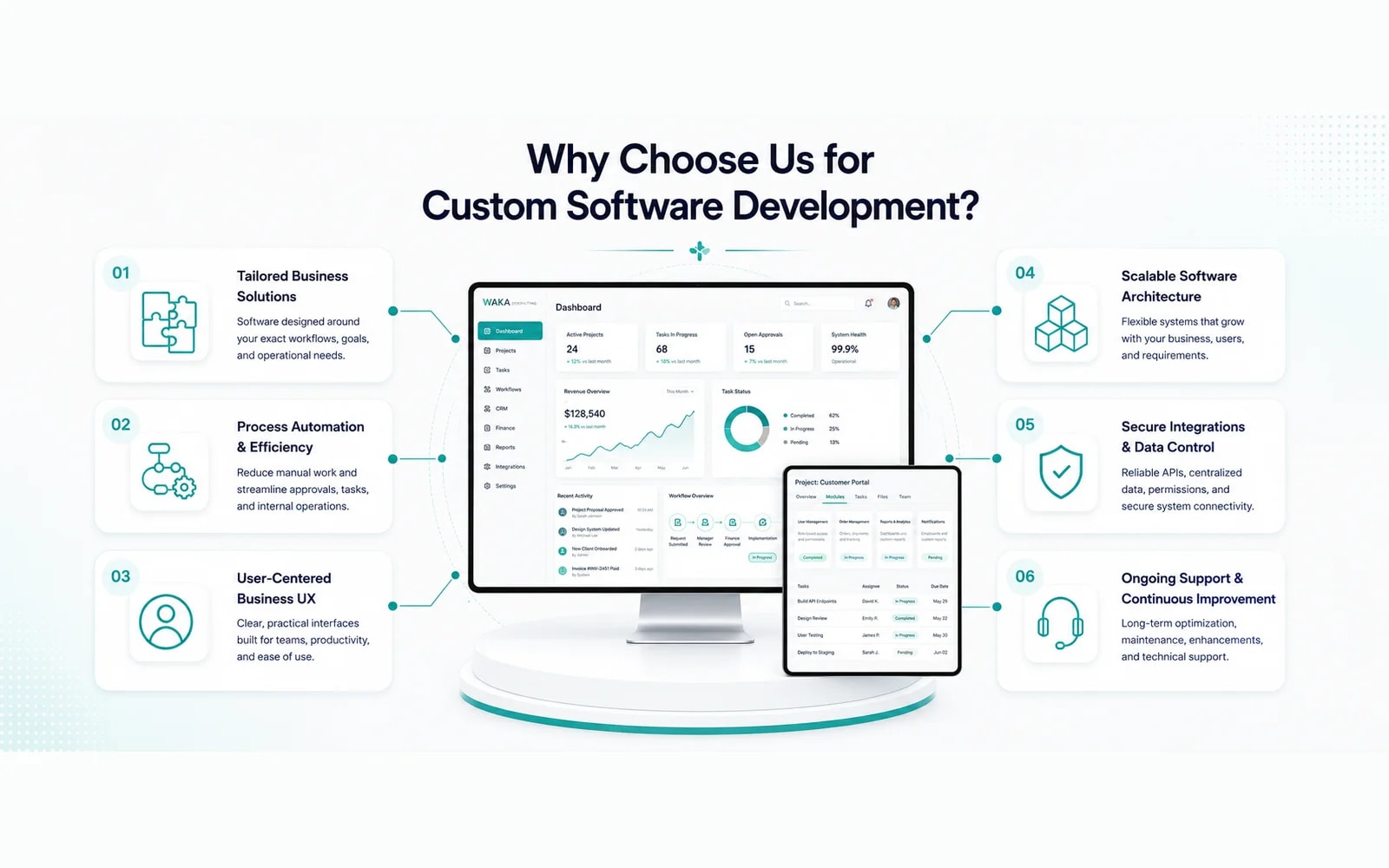
The process is the starting point
Requirements are traced to a real role, record, decision, rule, exception, or operational outcome so the backlog does not become a collection of disconnected requests.
Complete workflows are demonstrated
Each release connects interface, business logic, data, permissions, integrations, and failure behavior so stakeholders review usable system outcomes rather than isolated screens.
Ownership is designed in
Deployment, access, data stewardship, backups, diagnostics, support, documentation, and future change are considered before handover instead of becoming emergency work after launch.
Questions, answered
Custom Software Development FAQ
Direct answers about requirements, MVP scope, roles and data, integrations, migration, security, deployment, ownership, and ongoing support.
Ask about your projectWhat can a custom software engagement include?
The scope can include operational discovery, requirements engineering, workflow and data modelling, product and interface design, role-based applications, business rules, approvals, administration, APIs, integrations, imports and exports, reporting, audit history, testing, data migration, cloud deployment, monitoring guidance, documentation, training, and ongoing releases. We confirm the operating problem, users, data, dependencies, and acceptance criteria before committing to a build plan.
When should we build custom software instead of buying a product?
Custom software becomes more reasonable when the workflow creates meaningful advantage or control, packaged products cannot support essential rules or integrations, manual work carries measurable cost or risk, and the organization can own the resulting system. Discovery should compare configuration, integration, process change, and custom development before assuming a new build is necessary.
How is Custom Software Development different from Web Development?
Web Development focuses on a public marketing and content experience that supports discovery, trust, enquiries, campaigns, and publishing. Custom Software Development focuses on authenticated operational workflows, roles, records, permissions, rules, integrations, and system behavior. A customer portal may sit between them, so its dominant purpose and complexity should determine the scope.
How do you define the first release or MVP?
We identify the smallest complete workflow that creates useful operational value, includes the required roles and records, handles critical exceptions, and can be accepted with real criteria. Supporting foundations are included when omitting them would make the release unsafe or impossible to operate; speculative features remain in a prioritized backlog.
Can custom software connect to our existing tools?
Yes, where reliable APIs, webhooks, files, database access, or supported integration methods are available. We map data ownership, synchronization, validation, failure handling, rate or platform constraints, and support responsibility before treating an integration as a simple connector.
Can you migrate data from spreadsheets or an existing system?
Data migration can be included after the sources, quality, structure, volume, history, and reconciliation requirements are assessed. The plan defines mapping, cleansing, test migrations, acceptance checks, cutover, rollback where practical, and which records or history will not move.
How are security and permissions handled?
Security requirements are considered across roles, least-privilege access, authentication, sensitive data, validation, audit history, environments, dependencies, backups, and vulnerability response. The exact controls and assurance activities depend on the system risk, data, users, integrations, and compliance context.
Who owns and maintains the software after launch?
Ownership is agreed during scope and should cover source code, accounts, infrastructure, domains, data, third-party services, documentation, access, backups, incidents, dependencies, and future releases. Waka can provide an operational handover or an ongoing support arrangement, but responsibilities must remain explicit in either model.
Featured Insights
Stories of Digital Transformation Across Services and Industries
From Idea to Impact




Start with the operating problem
Turn a difficult workflow into a clear software decision.
Tell us how the work happens today, who is involved, which records and systems matter, and where packaged tools break down. We will help determine whether to configure, integrate, automate, or build—and define the right next step.