
Commerce Strategy, Engineering & Operations · Professional service
Build an e-commerce channel around real catalog, checkout, and operational rules
Engineer the complete path from product discovery to a tested transaction and operational handoff.
We plan and build platform-neutral commerce experiences around catalog rules, storefront journeys, checkout, payments, inventory, fulfillment, CRM connections, analytics, and the day-to-day work required to run the channel.
Catalog and customer-journey architecture Storefront, cart, and checkout engineering Commerce operations and transaction QA
Last reviewed:

E-commerce development
Platform-neutral e-commerce development from catalog to transaction and fulfillment
We plan and build commerce experiences around the complete order lifecycle. Catalog and pricing rules, product discovery, storefront behavior, cart and checkout, payment states, inventory, fulfillment, CRM connections, analytics, operational exceptions, and launch ownership are designed and tested together.
What makes an e-commerce platform ready to transact and operate?
- Model products, variants, bundles, pricing, promotions, availability, customer groups, markets, returns, and operating ownership
- Design and engineer accessible storefront, search, collection, product, cart, checkout, confirmation, and recovery journeys
- Connect approved payment, inventory, fulfillment, CRM, email, and reporting services, then test transactions, failures, analytics, and launch controls
The whole commerce path
Product discovery, transaction engineering, and back-office reality connected
A credible commerce build must serve customers and the people operating the channel. We connect catalog and pricing rules, search and product discovery, product detail, cart and checkout, payments, inventory, fulfillment, customer systems, analytics, exception handling, and launch controls instead of optimizing isolated screens.
Commerce strategy, catalog, and customer journey
Define the commercial model, product data, purchase rules, customer journeys, and operating responsibilities before selecting or extending a platform.
- Products, variants, bundles, pricing, promotions, and availability
- Customer segments, markets, devices, and priority journeys
- Search, navigation, filters, merchandising, and content needs
- Orders, returns, support, fulfillment, and ownership map
Storefront and checkout engineering
Design and engineer the responsive buying experience from first landing through a clear, resilient transaction path.
- Storefront information and component architecture
- Search, collection, product, recommendation, and content journeys
- Cart, checkout, validation, errors, and confirmation behavior
- Accessibility, performance, responsive behavior, and trust cues
Payments, inventory, fulfillment, and CRM integrations
Connect the commerce channel to the providers and internal systems required to take, fulfill, support, and reconcile orders.
- Payment-provider and transaction-state integration
- Inventory, order, fulfillment, shipping, and return flows
- CRM, email, tax, accounting, or support connections where approved
- API, webhook, retry, exception, and operational visibility design
Transaction QA, analytics, and launch readiness
Exercise critical transactions and operational scenarios, verify measurement, and prepare accountable owners for launch.
- Test products, promotions, payments, refunds, and failure paths
- Inventory, fulfillment, notification, and integration QA
- Commerce events, analytics, consent, and reporting checks
- Launch checklist, monitoring, documentation, and handover
Designed forBrands and retailers that need a platform-neutral commerce solution or custom rules - Shopify-specific work has its own focused service
- Brands launching a platform-neutral commerce experience
- Retailers with complex catalog, pricing, or checkout rules
- Businesses connecting commerce to inventory, fulfillment, or CRM systems
- Teams whose requirements extend beyond a standard theme setup
A transaction-led build process
From catalog and operating rules to a verified purchase flow
We make products, pricing, customer journeys, integrations, exceptions, reporting, and owners visible before implementation expands. Reviews use complete commerce scenarios - including failure and recovery - so a polished storefront is not mistaken for a launch-ready channel.
01
Commerce workflowMap, design, integrate, transact, launch
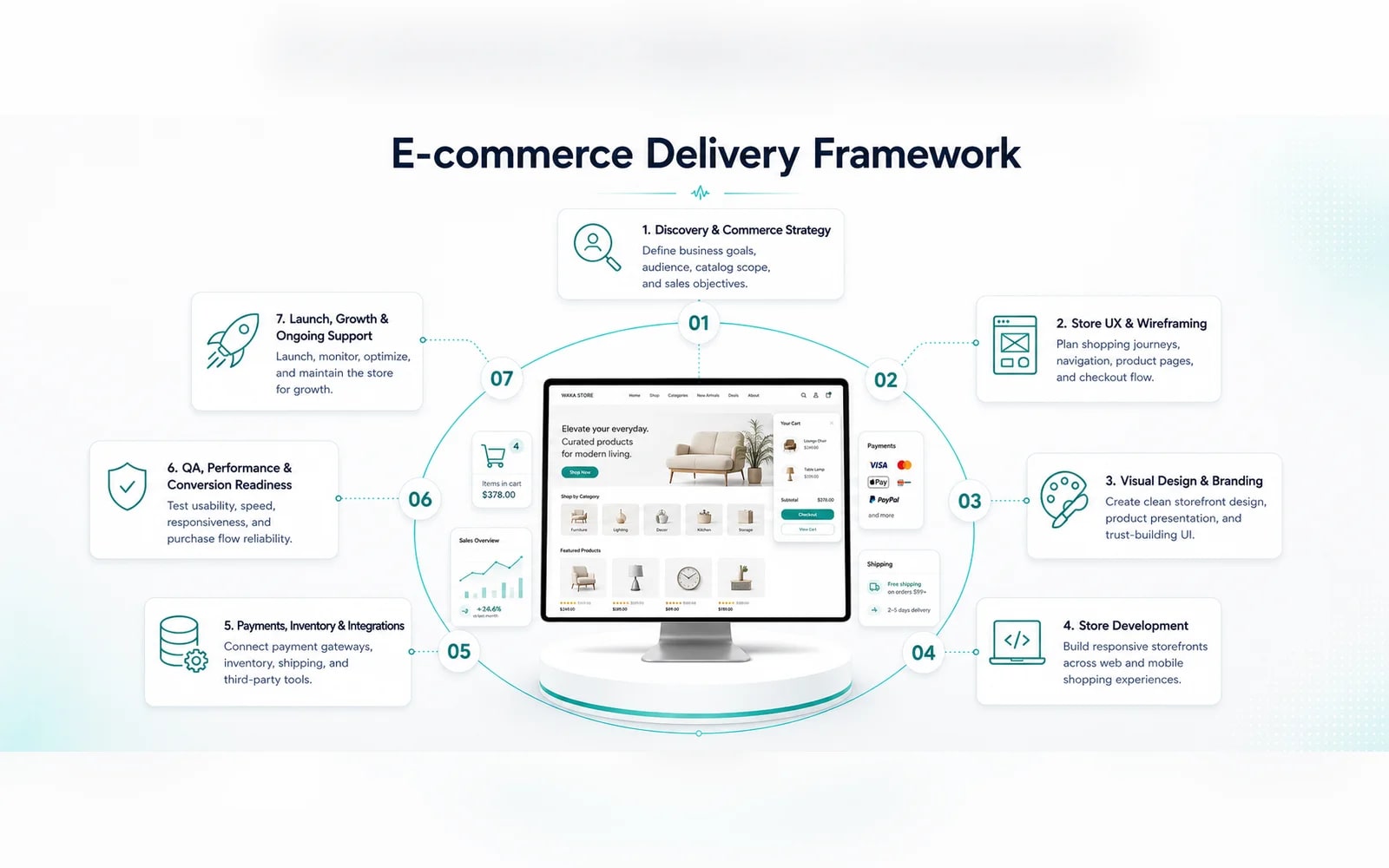
Map products, rules, and commerce operations
Map the product model, variants, prices, promotions, availability, customer groups, markets, fulfillment, returns, support, existing systems, constraints, and commercial measures that shape the channel.
Design discovery, product, cart, and checkout journeys
Design product discovery, collections, search, product detail, cart, checkout, confirmation, account, and recovery journeys across the agreed device range, including content and operational states.
Build and integrate the commerce system
Build the storefront and commerce logic, configure or connect approved payment, inventory, fulfillment, CRM, email, and reporting services, and expose retries and exceptions to accountable operators.
Test transactions, launch controls, and measurement
Test representative products, devices, promotions, transaction outcomes, refunds, inventory changes, notifications, integrations, analytics, and launch controls; then hand over operating and issue ownership.
Customer experience meets commerce operations
The purchase journey and the work behind every order stay connected
Commerce problems often appear at the seams: incomplete product data, mismatched prices, inventory timing, opaque payment states, fulfillment handoffs, missing events, or unclear support ownership. We treat those seams as part of the product and test them with realistic scenarios.
Commerce engineering capabilities
Storefront architectureCatalog and pricing rulesPayment integrationsInventory and fulfillmentCRM integrationsAPIs and webhooksCommerce analyticsTransaction QA
02
Working principlesEvery order has a lifecycle
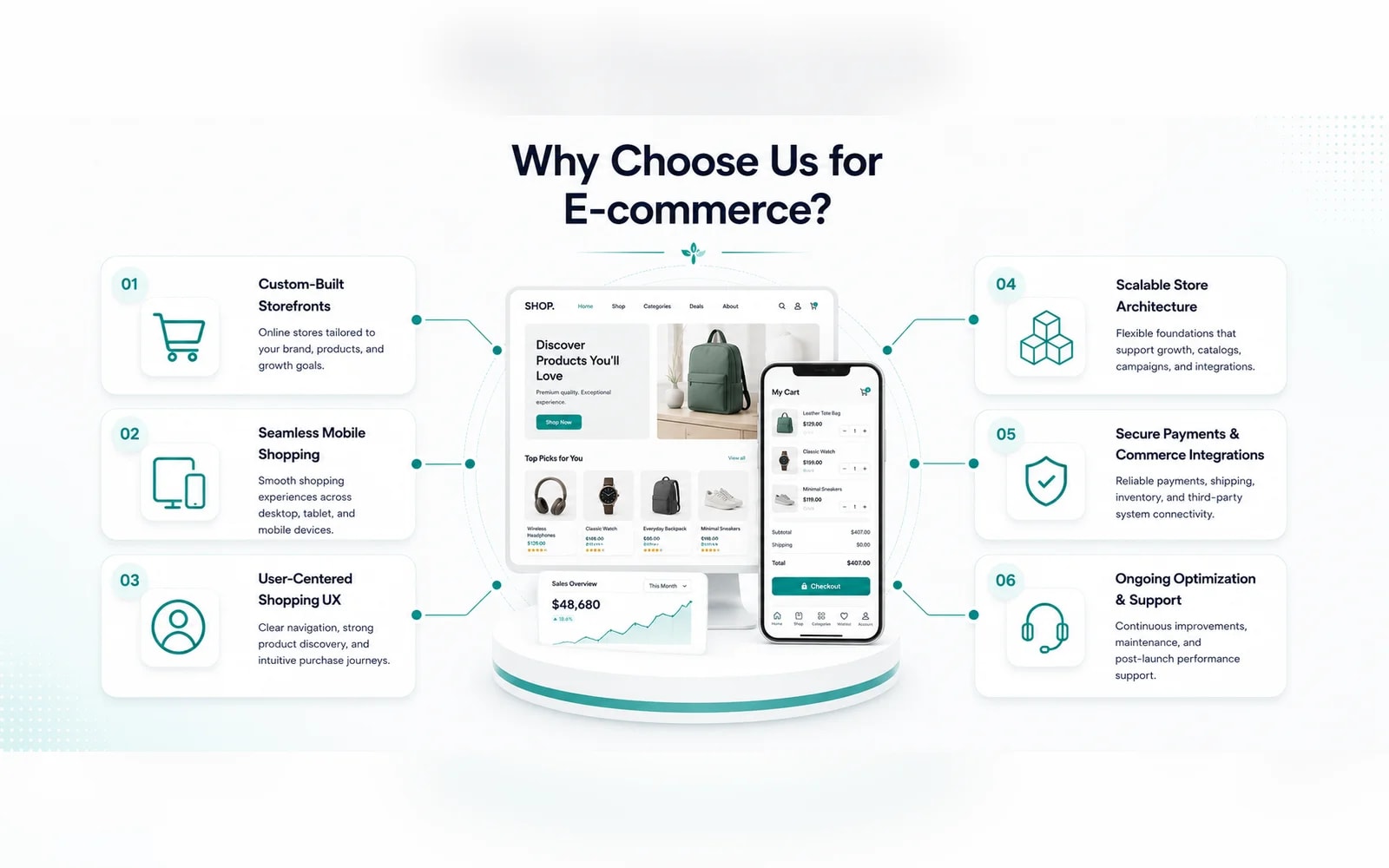
Platform follows the operating model
We evaluate catalog complexity, customization, integrations, ownership, budget, and future change before recommending a packaged, headless, or more custom approach. The platform is a constraint and capability, not the strategy itself.
Checkout includes failure and recovery
Validation, stock changes, payment outcomes, retries, duplicate actions, confirmation, refunds, and support visibility are mapped alongside the ideal purchase path.
Measurement needs context
Events and reporting are tied to meaningful commerce stages and validated where practical. They create a baseline for learning; they do not promise conversion, revenue, or repeat-purchase results.
Questions, answered
E-commerce FAQ
Direct answers about platform choice, catalog complexity, checkout, payments, operations, integrations, measurement, launch, and the Shopify boundary.
Ask about your projectWhat can an E-commerce Development engagement include?
The scope can include commerce discovery, product and catalog modeling, customer journeys, storefront architecture and development, search and filters, product detail, cart and checkout, payment-provider integration, inventory and fulfillment connections, CRM or support integrations, analytics events, responsive and accessibility review, transaction QA, launch planning, documentation, and operational handover. The exact scope follows the catalog, markets, systems, and commerce model.
How is E-commerce Development different from Custom Shopify Development?
E-commerce Development is platform-neutral and is appropriate when the first decision is how the commerce system should work across catalog, storefront, checkout, payments, inventory, fulfillment, and internal systems. Custom Shopify Development starts with Shopify as the selected platform and focuses on its theme architecture, Liquid, sections, templates, product content model, apps, settings, and platform constraints.
Do we need a custom platform or a packaged commerce platform?
That depends on catalog and pricing complexity, customer and market rules, content needs, checkout control, integration depth, operating skills, budget, launch timing, and long-term ownership. We can assess the tradeoffs and document the recommended boundary. Custom code should solve a demonstrated requirement, not exist only to make the build appear more advanced.
Can you handle complex catalogs, variants, bundles, or pricing rules?
Yes, when the selected platform and approved scope can support the required model. We document products, attributes, variants, collections, bundles, prices, promotions, availability, customer groups, markets, and source-of-truth ownership before implementation. Constraints or compromises are made explicit rather than hidden in the storefront.
How do you approach payments and checkout?
We normally integrate an approved payment provider and minimize the sensitive payment data handled by the custom application. The scope defines payment methods, transaction states, authentication, webhooks, retries, failure messages, refunds, confirmation, reconciliation, testing environments, and ownership. Formal payment-card compliance, tax, legal terms, and financial controls require the relevant client and specialist review.
Can you connect inventory, fulfillment, CRM, email, or support systems?
Yes, where suitable APIs, webhooks, exports, or provider workflows exist. We define source-of-truth rules, data mappings, timing, authentication, limits, retries, duplicate handling, monitoring, exceptions, and accountable owners so the integration can be operated after launch.
Will the new store guarantee more conversion, orders, or revenue?
No provider can guarantee those business results. We can create a clear and usable journey, remove known technical friction, implement appropriate performance and accessibility practices, test transactions, and establish meaningful analytics. Results also depend on demand, offer, pricing, traffic quality, merchandising, fulfillment, trust, service, and continued experimentation.
What do we receive at launch and handover?
Typical outputs include the implemented storefront and commerce flows, source and deployment guidance where applicable, catalog and content model, integration and data-flow notes, transaction and launch checks, analytics-event documentation, known limitations, operating and incident ownership, account guidance, and a prioritized post-launch improvement list.
Featured Insights
Stories of Digital Transformation Across Services and Industries
From Idea to Impact






Start with the commerce model
Turn your catalog and operating rules into a clear commerce architecture.
Tell us what you sell, how products and prices vary, which systems already exist, and where the current customer or order journey breaks. We will recommend the right platform boundary and delivery scope.