Engineering a Property Platform With Agencies, Moderation, Subscriptions, and Audit Trails
Assets Linkers was structured as a role-based property operating platform, not simply a public listing page, with backend support for agencies, verification, moderation, subscriptions, payments, and audit history.
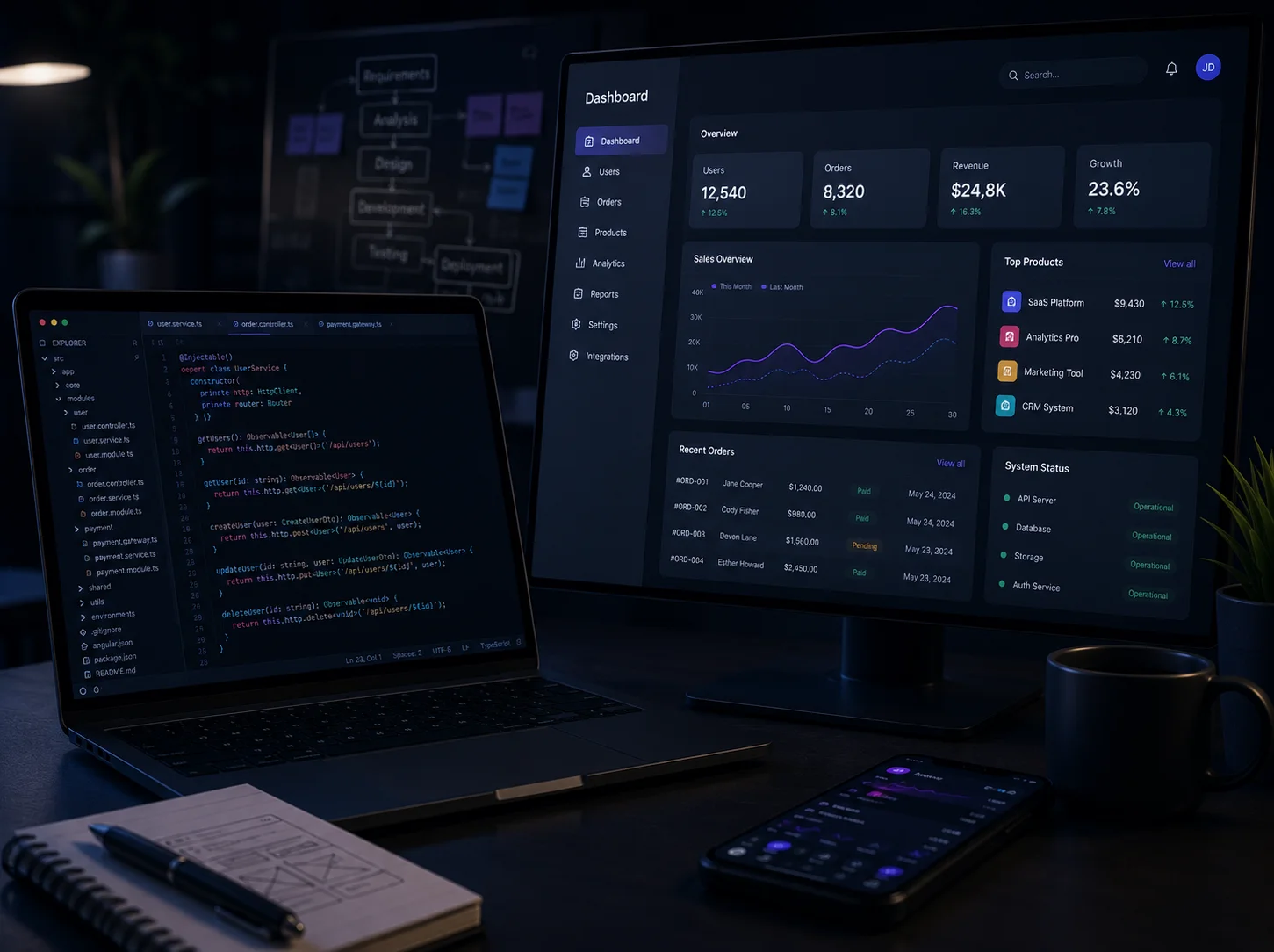
- Frontend
- Next.js
- Backend
- NestJS
- Persistence
- PostgreSQL and Prisma
- Schema
- 19 domain models
Turning property listings into a governed business platform
Property software becomes operationally complex once multiple agencies, team members, listing sources, plans, renewals, payments, and verification decisions share the same platform. Assets Linkers represents those concerns in a dedicated backend and a broad administrative frontend.
The repository includes property creation and moderation, agency management, bulk import, areas, plans, subscriptions, verification queues, administrative invitations, and audit logs. A production Docker composition keeps the frontend, backend, and PostgreSQL responsibilities deployable as separate services.
Keeping property operations accountable across agencies and administrators
A useful property platform needs to answer who can create, review, publish, override, subscribe, pay, and investigate. Those permissions and transitions must stay consistent across the public marketplace, agency teams, and administrative tools.
Represent users, roles, agencies, memberships, and property ownership clearly.
Support moderation, verification queues, and external listing origins.
Model plans, subscriptions, changes, add-ons, and payments as durable records.
Provide administrative auditability and deployment-ready service boundaries.
Engineering choices that shaped the system
The engineering direction emphasizes explicit data relationships and role enforcement so operational rules remain reviewable as the platform grows.
Build the platform around a durable domain schema
Nineteen Prisma models cover identity, agencies, properties, plans, subscriptions, payments, verification, sessions, invitations, and audit history.
Model the business, not only the screensCentralize role and permission logic
Backend RBAC and administrative permission definitions support protected operations rather than relying on hidden interface controls.
Authorization belongs on the serverKeep moderation and audit history explicit
Verification queues, property moderation, bulk import, external origins, and audit logs create traceable administrative workflows.
Operational decisions need historyPackage the services for production deployment
Docker definitions separate frontend, backend, and PostgreSQL while applying Prisma generation and migrations during controlled startup.
Deployment is part of developmentA property lifecycle with operational controls
The system connects inventory creation with the governance and commercial records around it.
Onboard
Create accounts, verify users, and establish agency membership.
Publish
Create or import properties with structured ownership and status.
Govern
Moderate listings, review verification, and record administrative actions.
Commercialize
Manage plans, subscriptions, add-ons, changes, and payments.
A full-stack property operations foundation
- Next.js public and administrative frontend
- NestJS API and authentication
- Prisma/PostgreSQL domain model
- Agency and membership workflows
- Moderation, verification, and audit tooling
- Production Docker configuration
A codebase that connects marketplace inventory with business administration
The result is a substantial platform foundation where property records, organizational access, commercial plans, and administrative decisions share one governed data model.
Role-aware property and agency operations
Traceable moderation and verification workflows
Deployment boundaries for frontend, API, and database
What development teams can reuse from this work
- Business platforms need explicit authorization and audit history, not only different dashboards.
- Subscription logic becomes easier to maintain when plans, changes, payments, and renewals have separate records.
- Bulk import and external origins should be designed into property governance.
- A production deployment plan should evolve with the application architecture.
About the project and its evidence
What makes Assets Linkers more than a listing website?
The codebase includes agencies, memberships, RBAC, verification, property moderation, subscriptions, payments, administrative invitations, audit logs, and production service configuration.
Does this page claim the platform is live?
No. It documents the development evidence present in the local repository and does not claim production users or commercial performance.
What security work remains important?
The repository itself notes that access-token storage should move toward stronger server-side session handling before production, alongside security review, monitoring, backups, and operational testing.
Build property software around governed operations, not listings alone.
Waka connects product thinking, interface design, development, and launch support in one delivery flow.